Upgrade Your Comfort! FLEXIBLE FINANCING AVAILABLE!
Ac Can’t Keep Up On Hot Days? Understanding System Limits
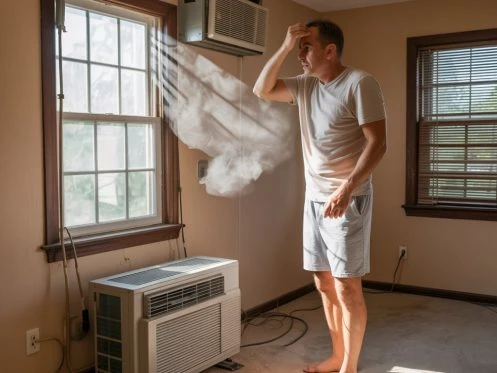
Your thermostat says 78°F, but your living room feels like 85°F. The AC is running nonstop, yet the house stays uncomfortably warm. Sound familiar?
When summer temperatures spike above 95°F, even reliable air conditioners can struggle. This isn’t always a sign of failure. Your system might be working exactly as designed, but extreme heat pushes it beyond its intended limits.
Over 255 million Americans faced extreme heat during the June 2025 heat dome, and many discovered their AC couldn’t keep pace. Understanding why this happens can help you avoid panic, make smart decisions, and know when professional help is necessary.
Let’s break down what’s really going on when your AC can’t keep up.
Why Your AC Struggles When Temperatures Soar
Most air conditioning systems follow a simple rule: they can cool your home about 20°F below the outdoor temperature. This is how they’re engineered.
If it’s 100°F outside, your AC might only bring indoor temps down to 80°F. At 105°F outdoors, you’re looking at 85°F indoors, even with the system running full blast. This isn’t a malfunction. It’s physics.
The problem gets worse during extended heat waves. Your home absorbs heat constantly throughout the day. Walls, ceilings, and floors become heat sponges. By afternoon, your AC is fighting an uphill battle against all that stored thermal energy.
High humidity makes things even tougher. Your system must remove moisture from the air while cooling it, which requires extra work. When it’s both hot and humid, your AC is pulling double duty, and performance drops noticeably.
If you’re dealing with persistent cooling issues, you might need professional air conditioner repair in Greenville, SC, to determine whether your system needs maintenance or has reached its capacity limits. If you’re experiencing prolonged cooling issues, reach out to our experts – see our AC installation Easley SC page for specialized services in the Easley area. At Tuck & Howell Plumbing, Heating & Air, we help homeowners understand whether their AC is operating normally under extreme conditions or needs repair.
The Temperature Threshold Most Systems Can’t Cross
Here’s what happens when outdoor temperatures exceed 95°F:
Your compressor works overtime. This component pressurizes refrigerant to move heat outside. When the temperature gap between indoors and outdoors grows too large, the compressor runs constantly without achieving your desired indoor temperature.
Components start overheating. Capacitors and motors generate more heat as they work harder. Some parts simply can’t handle sustained extreme temperatures and may fail.
Efficiency drops sharply. According to industry data, energy consumption can increase 20-30% during extreme heat, yet cooling output decreases. You’re paying more for less comfort.
From Always Ready Repair: “ACs struggle in extreme heat because they are designed for 80-90°F, and when temperatures exceed 95°F, they work overtime and may not keep up.”
NPR interviewed engineers who confirmed that air conditioners “are really only designed to keep indoor temperatures about 20 degrees cooler than outside.”
This explains why your AC performs perfectly in May but seems inadequate in late July. The system hasn’t changed, but the demands on it have—something homeowners often address with professional AC Installation in Clemson, SC, to ensure their system can handle peak summer conditions.
Hidden Problems That Make Hot Weather Worse
Beyond design limits, several maintenance issues can sabotage your AC’s performance during heat waves:
Dirty air filters are the most common culprit. A clogged filter restricts airflow, forcing your system to work harder while cooling less effectively. In extreme cases, restricted airflow causes the evaporator coil to freeze, shutting down cooling entirely.
Low refrigerant levels mean your AC can’t absorb and transfer heat properly. Refrigerant doesn’t get “used up” like fuel. If levels are low, you have a leak that needs professional repair.
Blocked condenser coils prevent heat release. The outdoor unit should expel heat absorbed from inside your home. When coils are covered in dirt, grass clippings, or debris, heat can’t escape efficiently.
Undersized systems were never adequate for your home. If your AC was too small when installed, extreme heat simply exposes this flaw. A properly sized system accounts for square footage, insulation quality, sun exposure, and local climate patterns.
Leaky ductwork wastes cool air before it reaches living spaces. Inadequate attic insulation can also allow conditioned air to escape, forcing your HVAC system to work even harder during extreme heat. Studies suggest 20-30% of conditioned air can escape through duct leaks in attics or crawlspaces, forcing your system to compensate.
Thermostat issues might cause the system to cycle incorrectly or read temperatures inaccurately, leading to poor performance you blame on the heat.
| Common AC Problem | How It Affects Performance | What It Looks Like |
| Dirty Filters/Coils | Restricts airflow; causes frozen coils | Weak airflow from vents; ice on indoor unit |
| Low Refrigerant | Reduces heat absorption capacity | Warm air from vents; hissing sounds |
| Blocked Outdoor Unit | Prevents heat release | Hot air not expelled; unit overheating |
| Undersized System | Can’t match cooling demand | Never reaches set temperature; runs constantly |
| Leaky Ducts | Loses cool air before delivery | Uneven cooling; hot spots in certain rooms |
How Heat Waves Are Getting More Intense
Climate data shows extreme heat events are becoming more frequent and severe. In July 2025, nearly 160 million Americans experienced temperatures made at least five times more likely by climate change.
The American Medical Association reports nearly 22,000 heat-related deaths occurred in the U.S. between 1999 and 2023. Many of these deaths happened indoors among people whose air conditioning systems failed or were inadequate.
Projections indicate summer AC demand could rise 8% if global temperatures exceed 1.5°C above pre-industrial levels. This increased demand risks overwhelming electrical grids during peak heat, causing brownouts or blackouts exactly when you need cooling most.
From CJS Heating and Cooling: “Extreme heat can place significant stress on your HVAC system, leading to increased energy usage, potential breakdowns, and reduced efficiency.”
What does this mean for you? Heat waves will likely continue testing your AC’s limits more frequently. Systems that performed adequately five years ago might struggle with tomorrow’s summer temperatures.
What You Can Do When Your AC Can’t Keep Up
When extreme heat hits and your AC struggles, try these strategies:
Adjust your expectations. Setting your thermostat to 68°F on a 100°F day is unrealistic. Parker & Sons recommends setting thermostats to 78°F when home during extreme heat. This helps your system run more efficiently and prevents constant cycling.
Reduce heat sources inside. Run dishwashers and dryers during evening hours. Turn off unnecessary lights. Even small heat sources add to your AC’s workload.
Block direct sunlight. Close blinds and curtains on sun-facing windows during peak heat hours. This simple step can reduce indoor heat gain significantly.
Use fans strategically. Ceiling fans don’t cool air, but they create air movement that makes you feel cooler. This allows you to tolerate slightly higher thermostat settings.
Avoid opening doors frequently. Every time you open an exterior door, hot air rushes in and cool air escapes.
Check your air filter. If you can’t remember the last time you changed it, replace it now. This is the easiest maintenance task that yields immediate results.
However, if your AC isn’t cooling at all, makes unusual noises, or you notice ice forming on the indoor unit, these are signs you need professional assessment rather than DIY adjustments.
When to Call for Professional Help
Some situations require expert diagnosis and repair:
- Your AC runs constantly but indoor temperature keeps rising
- You hear grinding, squealing, or banging sounds
- Ice forms on the indoor or outdoor unit
- The system cycles on and off every few minutes
- You smell burning or unusual odors
- Airflow from vents is noticeably weak
- Your energy bills spike dramatically without explanation
We’ve helped many Greenville homeowners diagnose cooling issues during extreme weather. Sometimes the solution is simple maintenance. Other times, it reveals that your system has reached the end of its service life or was never properly sized for your home.
A professional inspection checks refrigerant levels, tests electrical components, examines ductwork, measures airflow, and evaluates overall system capacity. This comprehensive approach identifies root causes rather than guessing at fixes.
For ongoing performance issues, regular maintenance through Tuck & Howell Plumbing, Heating & Air helps prevent problems before they occur. Annual tune-ups typically include filter replacement, coil cleaning, refrigerant level checks, and component testing.
Understanding the 2025 Refrigerant Changes
If you’re considering a new AC system, timing matters this year. As of January 1, 2025, EPA regulations require all new residential air conditioning and heat pump systems to use A2L refrigerants like R-454B or R-32.
These new refrigerants have lower global warming potential compared to R-410A, which is being phased out in new equipment. The change aims to reduce environmental impact while maintaining cooling efficiency.
What this means for you:
- Existing systems can continue using R-410A for repairs
- New installations must use the updated refrigerants
- Technicians need specific certification to handle A2L refrigerants
- The transition may affect equipment costs temporarily
If your current system still uses R-410A, you don’t need to replace it immediately. However, as R-410A becomes less available over time, repair costs may increase. When replacement becomes necessary, new systems with A2L refrigerants should offer improved efficiency.
For questions about whether upgrading makes sense for your situation, consult with a licensed HVAC professional in Simpsonville, SC who can evaluate your specific needs and budget.
How Proper Maintenance Helps Your System Handle Heat
Regular maintenance doesn’t increase your AC’s maximum capacity, but it ensures the system operates at peak efficiency when you need it most.
At Tuck & Howell Plumbing, Heating & Air, we’ve been providing maintenance services since 1969. Here’s what professional maintenance includes:
- Filter replacement to maintain proper airflow
- Coil cleaning to optimize heat transfer
- Refrigerant level checks to ensure proper cooling
- Electrical connection testing to prevent failures
- Condensate drain cleaning to avoid water damage
- Thermostat calibration for accurate temperature control
- Component lubrication to reduce friction and wear
Systems that receive annual maintenance before cooling season typically experience 30% fewer breakdowns during peak summer months. They also run more efficiently, which can lower energy costs even during extreme heat.
Think of maintenance as preparing for a marathon. Your AC faces a marathon every summer. Proper preparation helps it finish strong rather than breaking down halfway through.
Is It Time to Consider System Replacement?
If your AC is more than 12-15 years old and struggles during hot weather, replacement might be more economical than ongoing repairs.
Signs that replacement makes sense:
- Repair costs approach 50% of replacement value
- Your system uses R-22 refrigerant, which is no longer produced
- Energy bills have increased significantly over recent years
- Uneven cooling persists despite repairs
- The system can’t maintain comfortable temperatures even in moderate weather
Newer systems offer substantial efficiency improvements. A 15-year-old AC with a SEER rating of 10 uses significantly more energy than a new system rated SEER 16 or higher. Over time, energy savings can offset the replacement investment.
Proper sizing is critical during replacement. An oversized system cycles on and off too frequently, failing to dehumidify properly. An undersized system runs constantly without achieving comfort. Professional load calculations determine the right capacity for your specific home.
Making Your Home More Heat-Resistant
Beyond your AC system itself, home improvements can reduce cooling demands:
Improve insulation in attics and walls. Better insulation prevents heat from entering and cool air from escaping.
Seal air leaks around windows, doors, and penetrations. Even small gaps allow hot air infiltration.
Upgrade to reflective roofing when replacement is needed. Light-colored or reflective roofs absorb less heat.
Add window film to sun-facing windows. Modern films block heat while allowing light transmission.
Plant shade trees strategically. Trees on the south and west sides of your home can reduce cooling loads by 20-40%, though this is a long-term investment.
These improvements complement your AC rather than replacing it, but they can make the difference between adequate and inadequate cooling during extreme heat. For even greater energy efficiency and indoor comfort, consider upgrading your attic insulation in Spartanburg to help your AC perform at its best during extreme heat.
Stay Comfortable When Temperatures Spike
Your air conditioner works hard to keep you comfortable, but it has limits. When outdoor temperatures exceed 95°F, even well-maintained systems struggle to achieve indoor temperatures 20 degrees cooler.
Understanding these limits helps you set realistic expectations and recognize when professional help is needed. Regular maintenance ensures your system operates at peak efficiency when facing extreme conditions.
If your AC consistently can’t keep up, or you’re concerned about its ability to handle another intense summer, we can help. At Tuck & Howell Plumbing, Heating & Air, we’ve served Greenville since 1969 with honest assessments and quality solutions. We focus on solving problems properly rather than applying temporary fixes.
Our family-owned business has built a reputation on doing the job right the first time. We coordinate with manufacturers, understand the latest EPA regulations, and help ensure your system operates at peak efficiency.
Ready to ensure your AC is prepared for the next heat wave? Contact Tuck & Howell Plumbing, Heating & Air today for a comprehensive system evaluation and maintenance service. For even greater home comfort and energy efficiency, explore our attic insulation services to help reduce heat transfer and ease the strain on your cooling system.
Frequently Asked Questions
Why does my AC struggle only on the hottest days?
Air conditioners are designed to maintain about 20°F difference between outdoor and indoor temperatures. When outdoor temps exceed 95°F, your system reaches its capacity limit. This is normal operation, not necessarily a malfunction. However, if the system struggles at lower temperatures, maintenance issues like dirty filters or low refrigerant may be present.
Can I damage my AC by running it constantly during a heat wave?
Running your AC continuously during extreme heat won’t damage a properly maintained system. However, if the system struggles due to maintenance issues, continuous operation can accelerate wear on components. If your AC runs nonstop for days without achieving comfortable temperatures, have a professional evaluate it.
Should I turn my AC off during extreme heat to save it?
Turning off your AC during extreme heat can actually make things worse. Your home will absorb massive amounts of heat, and your system will work harder to cool it down later. Instead, set a reasonable temperature (around 78°F) and let the system run steadily.
How can I tell if my AC is undersized for my home?
An undersized AC runs constantly even in moderate weather, never reaches your set temperature, and creates uneven cooling throughout the house. If your system only struggles during extreme heat above 95°F, it’s likely properly sized but operating at its design limit.
Are newer AC systems better at handling extreme heat?
Newer systems offer better efficiency and improved components, but they still follow the same 20-degree rule. A new AC won’t magically cool your home to 70°F when it’s 110°F outside. However, newer systems do maintain performance better under stress and use less energy doing so.
What temperature should I set my thermostat during a heat wave in Greenville?
During extreme heat, setting your thermostat to 78°F provides the best balance between comfort and system efficiency. Every degree lower increases energy consumption and strain on your system. If 78°F feels too warm, use fans to increase air circulation.
How often should I change my air filter during summer?
During heavy AC use, check filters monthly. If you have pets, poor outdoor air quality, or run your system constantly, change filters every 30 days. Clean filters are crucial for maintaining airflow and preventing system strain during extreme heat.
Meet the Author

Schedule service For Your Home or Business Today!
Let us address your HVAC and plumbing concerns promptly and efficiently, providing you with reliable and lasting results. Your satisfaction is our top priority!