Serving Greenville & Surrounding Areas

Blog
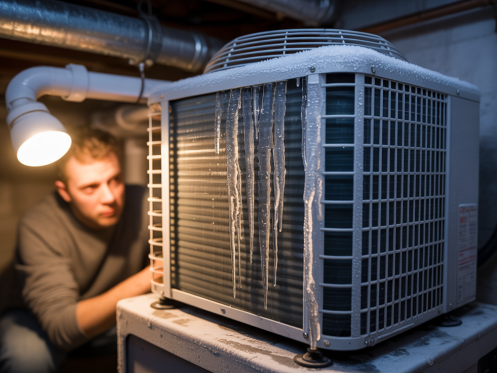
Your AC shouldn’t be producing ice in the middle of summer. When you spot frost forming on your evaporator coils or ice building up on your refrigerant lines, something’s disrupted your cooling system.
This frozen condition affects thousands of homeowners each year, and with record heat pushing systems harder than ever, understanding why it happens could save you from a costly breakdown.
The Primary Causes Behind Your Frozen AC Unit
Low refrigerant levels top the list when it comes to AC freezing problems. When your system loses refrigerant through leaks or other issues, it drops the pressure inside your evaporator coil. This pressure drop causes the refrigerant to expand too much, making the coil surface temperature plummet below 32°F.
Here’s what our technicians see most often:
- Refrigerant leaks – Corroded lines in units that are 10-15 years old frequently develop small leaks
- Dirty air filters – Blocked filters restrict warm airflow over the coil
- Clogged evaporator coils – Dust and debris act like insulation, preventing proper heat transfer
- Faulty blower motors – When the fan can’t circulate air properly, cold spots develop
The numbers tell the story. Based on 2025 service data, low refrigerant accounts for 50-60% of freezing cases, while airflow restrictions cause another 30-40% of problems. That means most freezing issues come down to these two main factors.
We’ve seen calls for airflow problems double during heat waves, especially when homeowners forget to change their filters regularly. For professional ac maintenance services in Greenville, SC, our team can catch these issues before they turn into frozen coils.
How Ice Actually Forms on Your AC System
The science behind AC freezing isn’t complicated once you break it down. Your air conditioner works by absorbing heat from your home’s air through the evaporator coil. Refrigerant flowing through this coil should maintain a temperature that allows it to absorb heat efficiently.
When the system balance becomes disrupted, problems develop. If there’s not enough refrigerant or not enough warm air flowing over the coil, the surface temperature drops too low. Once it hits 32°F, the humidity in your home’s air starts condensing and freezing on the coil.
A technician from Griffith Energy Services explains it this way: “Ice buildup often stems from low refrigerant or dirty coils – regular maintenance catches 80% of these early.”
This isn’t just a surface problem. The ice buildup signals deeper inefficiencies in your system’s heat transfer process. Left untreated, this can strain your compressor and lead to much more expensive repairs.
What You’ll Notice When Your AC Starts Freezing
Warm air from your vents is usually the first sign something’s wrong. Even though your thermostat is calling for cooling, the frozen coil can’t absorb heat properly. You might also hear:
- Hissing sounds from refrigerant leaks
- Unusual strain from your blower motor
- Water dripping as ice melts off the coils
These warning signs mean it’s time to call a professional. Trying to diagnose refrigerant problems yourself risks further damage to your system.
The 2025 Refrigerant Changes That Affect Freezing
New EPA regulations took effect January 1, 2025, that impact how AC freezing problems get fixed. The agency banned R-410A refrigerant production and requires new systems to use alternatives with lower global warming potential, like R-32 or R-454B.
This frozen condition creates new risks. Systems that get improperly retrofitted or undercharged with new refrigerants can develop the same low-pressure conditions that cause coil icing. Industry reports suggest freezing incidents could increase 10-15% in the first year after installation if the work isn’t done correctly.
Only EPA Section 608 certified technicians can legally handle refrigerant work. If you’re getting a new system or retrofit, make sure to verify your contractor’s certifications to avoid compliance issues and warranty problems.
Real Data on AC Problems in 2025
The numbers show just how common these freezing problems have become. According to ServiceTitan’s 2025 report, HVAC service calls rose 15% during heat waves, with airflow issues showing up in 40% of diagnostics.
Meanwhile, about 10% of U.S. households faced cooling failures during record heat this year, based on Census data. That translates to millions of homes dealing with AC problems when they needed cooling the most.
SoBellas Home Services reported that their El Paso service calls doubled during summer heat, with one technician noting: “Clogged filters strain motors, leading to freezes and breakdowns – our calls doubled this summer.”
Why Professional Diagnosis Beats DIY Fixes
Refrigerant issues require specialized equipment and certification to fix safely. While you might be tempted to check things yourself, refrigerant work involves EPA regulations and potential safety hazards.
Professional technicians can:
- Use manifold gauges to check refrigerant pressures accurately
- Identify leak locations with electronic detectors
- Safely recover and dispose of old refrigerant
- Properly charge systems with the correct refrigerant type
A quick filter change might solve airflow problems, but refrigerant leaks need professional attention. We’ve helped many homeowners avoid expensive compressor failures by catching low refrigerant problems early.
Preventing Future Freezing Problems
Regular maintenance stops most freezing issues before they start. Here’s what actually makes a difference:
- Change your air filter monthly during peak cooling season
- Keep vents and returns clear of furniture and debris
- Schedule annual tune-ups to check refrigerant levels and clean coils
- Watch for early warning signs like reduced airflow or warm air from vents
The refrigerant mandate means maintenance is more important than ever. New refrigerants require precise charging, and small leaks can quickly lead to freezing problems.
Get Your AC Back to Peak Performance
Don’t let a frozen AC leave you sweating through another heat wave. Our certified technicians at Tuck & Howell have the training and equipment to diagnose refrigerant problems, clear blocked airflow, and get your system running efficiently again.
Since 1969, we’ve helped families in Greer, SC stay comfortable through every season. Whether you’re dealing with a frozen coil right now or want to prevent problems before they start, reach out to see “Howell” . We’re different.
Frequently Asked Questions
Why does my AC freeze up after running for hours? Extended runtime often points to restricted airflow from dirty coils or filters. When warm air can’t circulate properly over the evaporator coil, cold spots develop and ice forms. This problem becomes more common during heat waves when systems run continuously.
Can a bad thermostat cause my AC to freeze? Yes, if your thermostat fails to cycle the system off properly, it can disrupt the normal cooling balance. The coil stays cold too long without periods to defrost naturally. Have a technician calibrate your thermostat if you suspect timing issues.
Will my brand new AC system freeze up? New systems can freeze if they’re improperly installed or undercharged with refrigerant. With the 2025 refrigerant changes, installation errors have become more common. Schedule an inspection if your new system is icing up.
What should I do if my AC lines are frozen solid? Turn off your system immediately and let the ice melt completely before restarting. Don’t try to chip ice off the coils. Call an HVAC contractor in Columbus to diagnose the underlying cause, which is usually low refrigerant or airflow problems.
Does low refrigerant always cause freezing? Low refrigerant is the most common cause, but not the only one. Dirty filters, clogged coils, and mechanical problems can also create the conditions for ice formation. Professional diagnosis determines the exact cause.
Meet the Author