Upgrade Your Comfort! FLEXIBLE FINANCING AVAILABLE!
Are Flushable Wipes Septic Safe? The Truth Plumbers and Studies Reveal (2026 Guide)
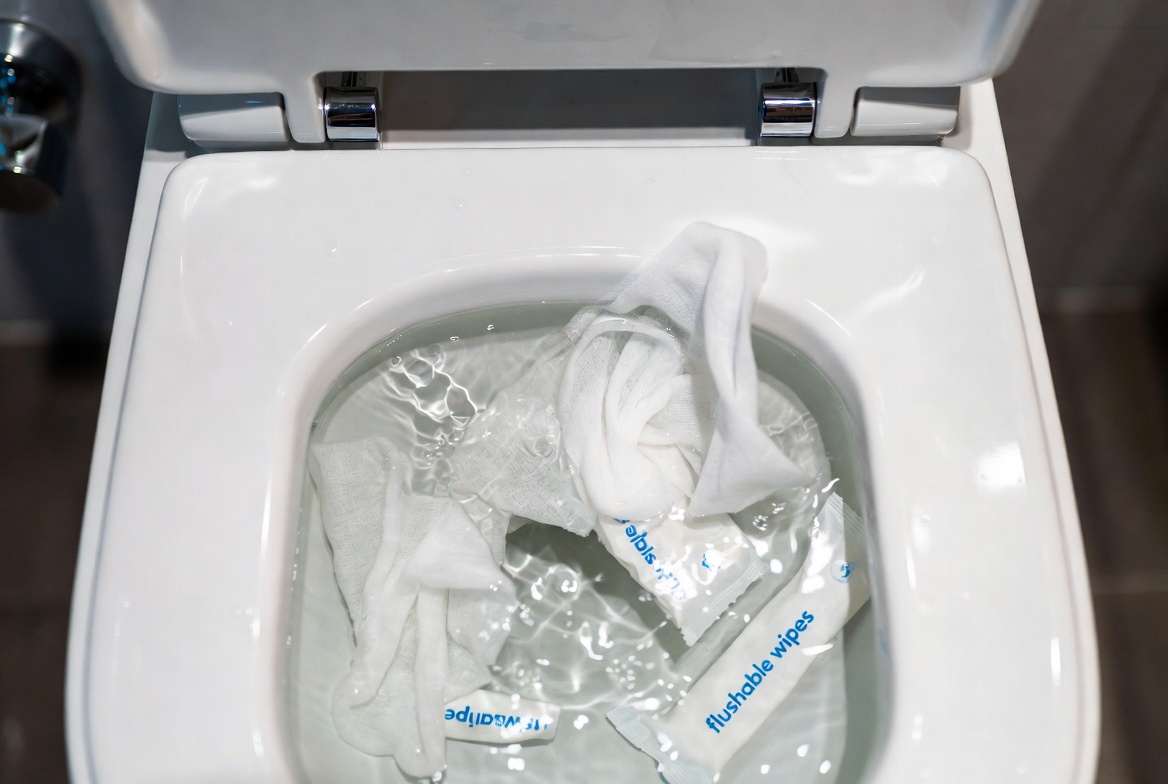
You bought the wipes. The package says “flushable.” It says “septic-safe.” Maybe it even says “biodegradable.” So you flush them without a second thought.
Here’s what the package doesn’t tell you: plumbers across the country pull these same wipes out of clogged pipes, blocked baffles, and failing septic systems every single week.
The label says one thing. The sewer says another.
If you’re on a septic system, especially in rural or suburban areas like Anderson, Greenville, Spartanburg, Buncombe, or any of the counties we serve here in the Carolinas, this is information you genuinely need before your next flush.
The Short Answer (Before We Get Into It)
No. Flushable wipes are not septic safe.
Not the ones that say “flushable.” Not the ones that say “biodegradable.” Not even the premium brands. Every credible independent source in 2025 and 2026, including Consumer Reports, the National Association of Clean Water Agencies (NACWA), and licensed plumbers, says the same thing: these wipes do not break down the way toilet paper does in real septic systems or sewer lines.
They look like they flush. They feel like they disappear. But they don’t.
What the “Flushable” Label Actually Means
This is the part that trips most people up.
“Flushable” on a wipe label means the product can pass through your toilet and down your drain pipe without immediately clogging it. That’s it. It’s a description of what happens in the first 10 seconds, not what happens over days, weeks, or years inside your septic tank or leach field.
Consumer Reports ran lab tests on 11 popular “flushable” brands in March 2025, updated again in February 2026. The brands tested included Amazon Basics, Cottonelle, Dude Wipes, and Kirkland, among others. The findings?
- None caused immediate blockages in single-wipe or intermediate-load tests.
- But none of them disintegrated sufficiently in pipes, septic systems, or treatment plants.
The report also referenced a study finding that more than 50% of wipes labeled “biodegradable” or “flushable” contain low-degradable synthetic fibers. These fibers do not break down under real wastewater conditions.
In short: they pass the toilet test and fail the septic test.
What Plumbers Say (And They Don’t Hold Back)
If you want the unfiltered take, ask a plumber.
Master plumber Dave Yates, quoted in Consumer Reports in 2025, put it plainly:
“It is not uncommon for wipes to bring to light compound problems… Tree roots will snag flushable products… The flushable term is a dodge.”
Dave Yates, Master Plumber, as quoted in Consumer Reports (2025)
CUES Inc., a trusted industry resource in the pipeline inspection space, published this on March 23, 2026:
“Contrary to popular belief, flushable wipes are not septic-safe or sewer-safe… a resounding ‘no.'”
CUES Inc., March 2026
They also describe what happens inside your system: wipes clump together with grease and debris into what professionals call “ragging” masses. These masses clog tanks, jam pumps, and choke drain lines.
Other licensed plumbers from 2025 service reports echo the same message. One put it this way: “Flushable wipes are the scourge of sewers and septic systems… absolutely, positively NO.”
At Tuck & Howell Plumbing, Heating & Air, our plumbing technicians have seen this firsthand. Wipes don’t just sit at the drain. They move far enough to seem fine, then collect exactly where you can’t easily see them.
The Real Cost: What Wipes Are Doing to Septic Systems Nationwide
This isn’t just a personal inconvenience. The scale of damage is significant.
According to NACWA, wipes add an estimated $441 million per year in extra operating costs to U.S. clean-water utilities. That covers pump failures, sensor damage, staff time, and emergency repairs. Every household that flushes wipes is contributing to a problem that affects everyone downstream.
On February 8, 2026, wipes clogged multiple bypass pumps at a major facility during a high-flow event. Hundreds of thousands of gallons of wastewater overflowed into the Potomac River, as reported by the Washington Post on February 20, 2026. Utilities across the country used that event to remind the public once again: the “flushable” label does not reflect real-world performance.
For homeowners on septic systems specifically, the risks stack up fast:
- Wipes accumulate in tanks and don’t break down between pump cycles
- They plug baffles, the components that keep solids from reaching the drain field
- They clog leach fields, which are expensive to repair or replace
- They cause slow drains, gurgling sounds, yard odors, and wet spots before the system fully fails
More than 1 in 5 U.S. households use a septic or small-cluster system. In the counties we serve, that number is even higher. Rural and suburban properties in Pickens, Oconee, Laurens, Henderson, Polk, Wayne, and Greenwood counties often rely entirely on private septic systems with no municipal backup if something goes wrong.
The 2026 WIPPES Act: A New Law That Changes the Label (But Not the Risk)
There’s a regulatory update worth knowing about, especially if you’ve been following the wipes debate for a while.
The WIPPES Act (Wastewater Infrastructure Pollution Prevention and Environmental Safety Act, H.R. 2269 and S.1092) passed the U.S. House in June 2025 and was signed into law after passing the Senate on March 22, 2026.
What it does: It mandates standardized national “Do Not Flush” labeling on all non-flushable wipes. This creates consistency across packaging so consumers aren’t misled by vague marketing language.
What it doesn’t do: It doesn’t make wipes safer to flush. It doesn’t change how wipes behave in your pipes or septic tank. It just requires clearer warnings.
The law is supported by INDA (the Association of the Nonwoven Fabrics Industry) and NACWA. Seven states already had similar rules; this is now a nationwide standard.
So if you start seeing “Do Not Flush” more prominently on packaging, that’s why. The law caught up to what plumbers have been saying for years.
Warning Signs Your Septic System May Already Be Affected
If wipes have gone down your drains, here are the signs that something may already be developing inside your system:
- Slow drains throughout the house (not just one fixture)
- Gurgling sounds from toilets or drains after flushing
- Unpleasant odors near drains or in the yard
- Wet or soggy spots in the yard above or near your leach field
- Sewage backing up into tubs, sinks, or toilets
Any one of these warrants a call to a licensed plumber. All of them together mean it’s urgent.
If you’re in one of the counties we serve and you’re seeing these signs, the team at Tuck & Howell Plumbing, Heating & Air can run a camera inspection to see exactly what’s happening inside your lines and septic system before it becomes a full failure.
What You Should Actually Flush (It’s a Short List)
This is one of those rare cases where the answer is simple.
Only flush:
- Human waste
- Toilet paper
That’s the entire list. No exceptions that are currently backed by independent testing.
Trash everything else, including:
- Baby wipes (even “sensitive” or “natural” ones)
- Disinfecting wipes
- Makeup removal wipes
- “Flushable” toilet wipes of any brand
- Paper towels
- Feminine hygiene products
- Cotton balls or cotton rounds
Toilet paper is specifically manufactured to disintegrate quickly in water. Wipes are not. The material that makes wipes strong and effective for cleaning is the same material that makes them dangerous for your plumbing.
How to Protect Your Septic System Going Forward
You don’t need to overhaul your whole routine. A few changes go a long way.
Stop flushing wipes immediately. There is no “safe” brand at this time based on independent testing.
Switch to a bidet attachment. They’ve become much more widely available and affordable, and they eliminate the need for wipes entirely. A licensed plumber can help confirm your setup is compatible.
Schedule regular septic maintenance. Most systems need pumping every three to five years, depending on household size and usage. If wipes have been flushed, sooner is better.
Get a camera inspection if you have any of the warning signs listed above. Early detection is significantly less disruptive and less costly than emergency repairs.
Spread the word in your household. Everyone who uses the bathroom needs to know the rules. Kids especially may not realize a “toilet wipe” isn’t the same as toilet paper.
At Tuck & Howell Plumbing, Heating & Air, we’ve been helping home and business owners since 1969 across Greer, SC, and the surrounding counties. Preventive care is always less stressful than emergency calls. If you’re not sure what condition your septic system is in, it’s worth getting it checked before a problem becomes urgent.
Don’t Wait Until Your Yard Is Telling You Something Is Wrong
Septic systems give you warning signs before they fail completely. The warning signs listed above are the system asking for help.
Most homeowners who end up with a failed leach field or a backed-up septic tank started with small, easy-to-ignore symptoms. Slow drains. A faint smell. A slightly soft patch in the yard. Life gets busy and those things get put off.
By the time sewage is backing up into the house, the repair is far more involved.
If you’ve been flushing wipes for months or years and you’re in Anderson, Buncombe, Spartanburg, Pickens, Greenville, Laurens, Polk, Henderson, Greenwood, Wayne, or Oconee County, a routine check-in with a plumbing professional is a reasonable step to take. Our team at Tuck & Howell Plumbing, Heating & Air can help you understand what’s happening in your system and what, if anything, needs attention.
The rule is simple. Trash the wipes. Protect the system.
Frequently Asked Questions
Are any flushable wipes actually safe for septic tanks? Based on independent testing through 2025 and 2026, including Consumer Reports lab tests on 11 popular brands, no wipe currently on the market has been verified as safe for septic systems. Even wipes labeled “septic-safe” or “biodegradable” contain fibers that do not break down in real septic or sewer conditions. The safest approach is to throw all wipes in the trash.
What happens to flushable wipes in a septic tank? They accumulate. Unlike toilet paper, which begins breaking apart almost immediately in water, wipes hold their structure. Over time they build up in the tank, clog baffles, and can reach the drain field where they block the soil absorption process. This leads to slow drains, backups, and eventually system failure.
How do I know if wipes have already damaged my septic system? Common warning signs include slow drains throughout the house, gurgling toilets, sewage odors near drains or in the yard, wet spots or unusually green patches over your leach field, and sewage backing up into fixtures. If you notice any of these, contact a licensed plumber for an inspection.
What is the WIPPES Act and does it make wipes safer to flush? The WIPPES Act, passed in 2026, requires standardized “Do Not Flush” labeling on non-flushable wipes nationwide. It does not change what wipes are made of or how they behave in plumbing. It is a labeling law, not a safety certification. Wipes that previously said “flushable” are not safer to flush because of this law.
How often should a septic system be pumped if wipes have been flushed? This depends on your system’s size, household usage, and how long wipes were being flushed. A licensed plumber can assess your tank’s current condition and recommend a pumping schedule. In general, most systems are serviced every three to five years, but systems with added buildup from wipes may need attention sooner.
Do flushable wipes affect municipal sewer systems too, or just septic systems? Both. NACWA estimates that wipes cost U.S. clean-water utilities $441 million per year in extra operating costs due to pump failures and blockages. A February 2026 incident in Washington, D.C. resulted in overflow into the Potomac River after wipes clogged bypass pumps. The problem is widespread regardless of whether you’re on a private septic system or connected to a municipal sewer.
Can a bidet replace wipes entirely? Yes. Bidets have become widely available and are compatible with most standard toilets. If you’re considering making the switch and want to confirm your plumbing setup is compatible, a licensed plumber can walk you through your options.
Schedule service For Your Home or Business Today!
Let us address your HVAC and plumbing concerns promptly and efficiently, providing you with reliable and lasting results. Your satisfaction is our top priority!