Upgrade Your Comfort! FLEXIBLE FINANCING AVAILABLE!
Upstairs AC Not Working But Downstairs Is? Read This First
Your upstairs feels like a sauna. Your downstairs is perfectly cool. And your AC is running the whole time.
If that sounds familiar, you’re not imagining it, and you’re not alone. Warmer springs and multi-story home designs are pushing more homeowners to ask the same question: why is my upstairs so much hotter than my downstairs when the AC is running?
Here’s the thing. This isn’t just a comfort issue. It’s a signal. Your system has been building toward this for a while, and the longer it goes unaddressed, the more it costs you, both in energy bills and potential repairs. If you’re in Greenville, Spartanburg, Buncombe, or any of the surrounding counties, and your upstairs AC isn’t keeping up, this is worth reading before you do anything else.
Why Your Upstairs Stays Hot While Downstairs Stays Cool
Before you start closing vents or cranking the thermostat, it helps to understand what’s actually happening. There are several real causes behind this, and each one requires a different fix. Guessing wrong can make things worse.
Here are the five most common culprits.
1. Duct Leaks in the Attic
This is one of the most common causes of uneven cooling in two-story homes, and one of the easiest to miss.
Your attic ducts carry cooled air from the AC unit to your upstairs rooms. When those ducts develop leaks, a significant amount of that cooled air never makes it to where it’s going. According to the U.S. Department of Energy’s 2025 energy audits, duct leaks can waste 20 to 30% of cooled air, leaving upstairs areas 5 to 10°F warmer than they should be.
In humid areas like Anderson, Oconee, and Henderson Counties, leaky attic ducts also raise the risk of moisture buildup and mold growth inside the ductwork, which adds a whole different problem to the mix.
What homeowners get wrong: Many people assume that if air is coming out of the upstairs vents, the ducts are fine. But you can have leaks in the main trunk lines that reduce airflow significantly before it even reaches the vents.
As home improvement expert Bob Vila noted in a 2026 BobVila.com article:
“Uneven cooling in two-story homes often stems from zoning system failures or duct leaks, which can waste up to 30% of your AC’s output. Professional inspection is essential to prevent escalation.”
2. Zoning System Failures
If your home has a multi-zone HVAC system, this is worth paying close attention to.
Zoning systems use dampers inside your ductwork to control airflow to different parts of your home. When those dampers malfunction or get stuck, one zone can get too much air while another gets almost none. According to a 2025 ASHRAE study, zoning failures affect 30% of two-story homes with multi-zone systems, often due to damper problems or poor initial setup.
The result? Your downstairs zone gets the lion’s share of cooled air, while your upstairs runs warm. And here’s the part that stings: a zoning failure doesn’t just make you uncomfortable. It typically pushes energy bills 15 to 20% higher, because the system is running hard to try to compensate.
The DIY trap: Some homeowners try to manually adjust dampers themselves. Without knowing which zones are actually failing and why, this often creates new imbalances rather than fixing the original problem.
3. Low or Imbalanced Refrigerant Levels
Refrigerant is what allows your AC to actually cool the air. When levels drop or become imbalanced, the system loses its ability to pull heat out of your home effectively. According to EPA data from 2024 to 2026, low refrigerant levels contribute to uneven cooling in about 25% of reported AC issues.
The upstairs floors of a home are typically warmer to begin with, because heat rises. A system that’s already struggling with refrigerant issues will almost always show the weakness there first.
There’s also a regulatory angle here that’s worth knowing. Under the 2020 American Innovation and Manufacturing (AIM) Act, HFC refrigerants like R-410A are being phased out, with an 85% reduction target by 2036. Tighter leak repair rules came into effect in 2025. Per the EPA’s January 2026 AIM Act update:
“With the 2025 HFC phase-down under the AIM Act, imbalanced refrigerants in older systems are a growing problem. Homeowners should consult certified technicians for compliant upgrades.”
This matters because non-compliant repairs can result in fines up to $50,000 per violation and may void your system’s warranty. If a technician isn’t EPA-certified, the repair itself could create legal exposure. This is one area where calling a licensed professional isn’t optional.
If you’re already noticing warm spots upstairs and aren’t sure whether your system has a refrigerant issue, getting a proper diagnosis before attempting any repairs is the safest move. For homeowners in Greenville County, our team handles ac repair in Greenville and can assess refrigerant levels and compliance as part of a full system check.
4. Blower Motor Stress
The blower motor is what pushes air through your entire duct system. When it’s overworked or starting to fail, the system can’t move enough air to cool your whole home evenly.
A 2026 Consumer Reports survey found that blower motor problems account for 18% of uneven cooling cases, often due to restricted airflow from dirty filters, blocked vents, or poor maintenance over time. An overloaded blower motor can reduce overall system efficiency by up to 25%.
Here’s where things compound. Duct leaks make the blower work harder. Zoning failures put extra demand on it. If your system has multiple issues at once, the motor often takes the hit first, and upstairs rooms are where you feel it.
HVAC engineer John Gorman put it clearly in a 2025 HVAC Insider interview:
“Blower motor stress from poor insulation or leaks compounds uneven cooling, leading to premature failures. Maintenance by licensed pros can extend system life by 5 to 10 years.”
5. Inadequate Attic Insulation
This one surprises a lot of homeowners.
Your attic acts as a thermal buffer between the hot outside air and your upstairs living space. When insulation is thin or missing, heat radiates straight down through your ceiling into your upstairs rooms, no matter how hard your AC runs.
According to 2025 International Energy Conservation Code (IECC) benchmarks, homes with inadequate attic insulation see upstairs temperatures rise 8 to 12°F higher than they should be. This affects about 40% of pre-2010 builds across the Southeast US.
For South Carolina and North Carolina homes specifically, updated 2023 IECC standards (adopted by both states by 2025) now require R-8 duct insulation in attics for new installs and qualifying repairs. If your home predates these standards and hasn’t been updated, your insulation may be working against your AC system. Our team provides attic insulation in Simpsonville SC to help homeowners upgrade outdated insulation, improve energy efficiency, and maintain more consistent temperatures throughout every level of the home.
The Real Cost of Letting This Go
It’s tempting to assume this is just a warm season annoyance that you can manage with a fan. But the data suggests otherwise.
According to DOE 2026 estimates, uneven cooling can increase energy bills by $200 to $500 annually in the Southeast US. And a 2026 analysis from Home Energy Magazine found that when these issues interact, such as duct leaks stressing the blower while also causing refrigerant loss, repair costs can increase by 50% compared to catching one issue early.
A 2025 CDC report also noted that poor upstairs cooling in multi-story homes contributes to elevated indoor humidity and allergen risks in 15% of cases. In a humid climate like the Carolinas, that’s not something to wave off.
Per Angi’s 2026 data, 60% of uneven cooling cases require same-day professional intervention to prevent further system failure. That’s a meaningful stat. It means the gap between “I’ll deal with it later” and “now I need an emergency repair” can be pretty short.
What Cranking the Thermostat Actually Does
This is one of the most common responses, and one of the most misunderstood ones.
When your upstairs is warm, turning the thermostat down feels logical. But here’s what actually happens: the downstairs thermostat (in most standard setups) hits its target temperature and signals the system to cycle off, even though upstairs is still hot. Your system never addresses the real imbalance. It just runs harder, wears faster, and costs more.
Other “fixes” that can backfire:
- Closing downstairs vents: This increases static pressure in the duct system, which can stress the blower motor and cause airflow problems in the vents that remain open.
- Adding a window unit upstairs: This patches the symptom without addressing the cause, and can actually mask the warning signs of a larger system failure.
- Blocking return air vents: This restricts the airflow your system needs to function properly and can lead to coil freezing.
None of these are solutions. They’re workarounds that delay the diagnosis.
How a Professional Diagnostic Actually Works
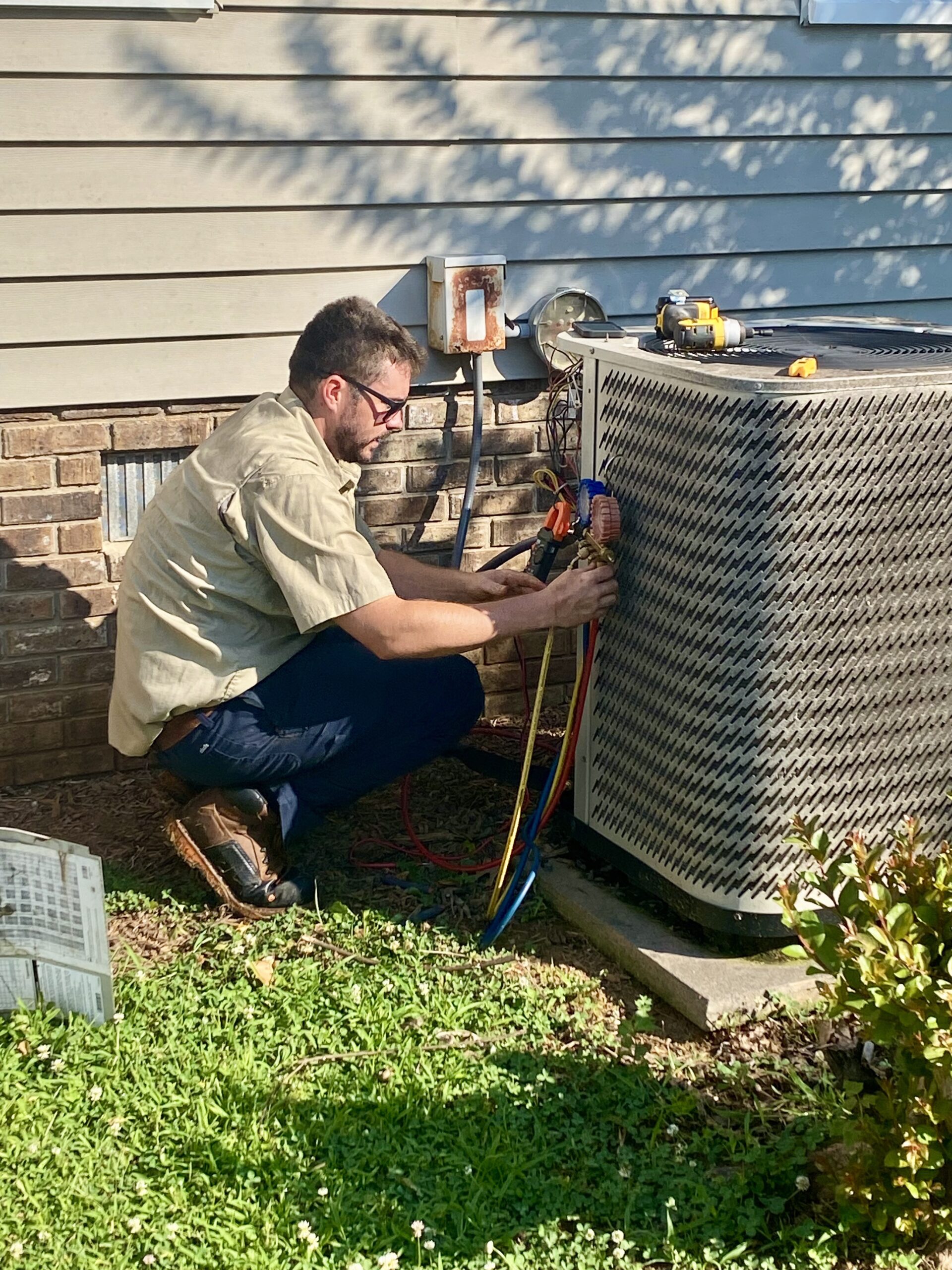
The only way to know which of these issues is actually happening in your home is a full system diagnostic. That typically includes:
- Airflow measurement across upstairs and downstairs vents to identify imbalances
- Duct inspection for leaks, disconnections, or blockages in attic runs
- Refrigerant level check by an EPA-certified technician
- Blower motor assessment for efficiency and strain
- Insulation evaluation in the attic space
- Zoning system review if applicable
At Tuck & Howell Plumbing, Heating & Air, we’ve been doing this work since 1969, including providing trusted AC repair services in Clemson SC. We’ve seen these combinations play out in homes across Greenville, Spartanburg, Anderson, Pickens, Buncombe, and the surrounding counties. What we’ve found is that it’s rarely just one thing. It’s usually two or three issues working together, and addressing only one of them leaves the rest in place.
We treat your home the way we’d treat our own. That means we’re not going to recommend a repair you don’t need, and we’re not going to skip the inspection to save time.
Is Uneven Cooling a Sign of Bigger HVAC Problems?
Yes. According to Home Energy Magazine’s 2026 analysis, uneven cooling that goes undiagnosed is one of the strongest early indicators of compounding system failure. The issues listed above don’t typically stay isolated. Duct leaks stress the blower. Refrigerant loss strains the compressor. Insulation gaps keep heat load high, which keeps everything working harder.
If your upstairs has been consistently warmer than your downstairs for more than a few days, especially during mild weather, it’s worth getting a professional to take a look. This is the kind of thing that doesn’t get better on its own.
What to Do Right Now (Before You Call)
Before you schedule your inspection, here are a few things worth noting:
- Check your air filter. A clogged filter restricts airflow system-wide and can mimic more serious problems. If it’s visibly dirty, replace it and see if there’s any change over 24 hours.
- Check that upstairs vents are open and unblocked. Furniture, rugs, and curtains sometimes block vents without anyone noticing.
- Note the temperature difference. If upstairs is consistently more than 5°F warmer than downstairs with the AC running, that’s a meaningful gap worth mentioning to your technician.
- Don’t adjust dampers yourself if you have a zoning system. Leave that for the diagnostic.
These checks take five minutes and help your technician get a clearer picture faster.
Ready to Stop Guessing?
If your upstairs is consistently warmer than your downstairs, you don’t need to figure this out alone. Tuck & Howell Plumbing, Heating & Air has been helping homeowners across Greenville, Spartanburg, Anderson, Pickens, Buncombe, Henderson, Oconee, Laurens, Polk, Greenwood, and Wayne Counties get to the bottom of exactly this kind of problem since 1969.
We’ll find what’s underneath, not just what’s visible. Contact Tuck & Howell today to schedule a full system diagnostic, explore the benefits of crawl space encapsulation for your home’s air quality, and find out what your AC has been trying to tell you.
Frequently Asked Questions
Why is my upstairs AC not cooling but downstairs is fine? This is most commonly caused by duct leaks in the attic, zoning system failures, or low refrigerant levels. According to the DOE’s 2025 data, duct leaks alone can waste 20 to 30% of your system’s cooled air output. A professional inspection is the most reliable way to identify which issue is affecting your home.
Can I fix uneven home cooling myself? Most causes of uneven cooling require professional diagnosis and repair, particularly refrigerant issues, which must be handled by EPA-certified technicians under current regulations. DIY adjustments like closing vents or changing thermostat settings often make things worse by masking the underlying problem.
How much does it cost to fix uneven cooling upstairs? Costs vary significantly depending on the cause. Duct sealing averages $500 to $1,500 nationally according to HomeAdvisor’s March 2026 data, but refrigerant repairs, zoning fixes, or insulation upgrades will differ. Contact a licensed HVAC contractor in Liberty, SC or your area for an accurate quote.
Is uneven cooling a sign of a failing AC system? It can be. Home Energy Magazine’s 2026 analysis found that when multiple issues such as duct leaks, blower motor stress, and refrigerant imbalance occur together, repair costs can increase by up to 50% if left unaddressed. Early professional attention typically prevents more costly failures.
How long does it take to diagnose uneven cooling? A thorough HVAC diagnostic in Simpsonville, SC typically takes one to two hours. Per Angi’s 2026 data, 60% of uneven cooling cases require same-day professional intervention to prevent further system damage, so it’s worth scheduling sooner rather than later.
Does upstairs insulation really affect how well my AC works? Yes, significantly. According to 2025 IECC benchmarks, inadequate attic insulation can cause upstairs rooms to run 8 to 12°F warmer than they should, which means your AC is constantly fighting heat gain from above regardless of how efficiently it’s running.
Does Tuck & Howell serve my area? Tuck & Howell Plumbing, Heating & Air serves Anderson, Buncombe, Spartanburg, Pickens, Greenville, Laurens, Polk, Henderson, Greenwood, Wayne, and Oconee Counties. Reach out to see if we cover your specific location.
Schedule service For Your Home or Business Today!
Let us address your HVAC and plumbing concerns promptly and efficiently, providing you with reliable and lasting results. Your satisfaction is our top priority!