Upgrade Your Comfort! FLEXIBLE FINANCING AVAILABLE!
Will Your AC Run With a Bad Capacitor? Yes, But Here’s Why That’s a Problem

Short answer: Yes, your AC can still run with a weak or failing capacitor. But every minute it does, your compressor and fan motor are pulling extra current, running hotter, and getting closer to a repair bill that’s roughly ten times bigger.
That’s the part most homeowners miss. The unit hums. Cold air still comes out sometimes. The thermostat hasn’t given up. So you think you’re fine. You’re not.
We’ve spent over 50 years across the upstate counties watching what happens when a small part quietly takes down a big one. This guide walks you through why running an AC on a bad capacitor wrecks compressors, what the warning signs look like, and why the math in 2026 is different than any year before it. If your system is already acting up, you can skip the reading and book an AC repair visit with Tuck & Howell Plumbing, Heating & Air instead.
The Direct Answer for People Skimming
Yes, an AC will keep running with a bad capacitor, until it doesn’t. The cooling cycle may start late, shut off early, blow warm air, or trip the breaker. The compressor and fan motor compensate by drawing more current, which generates more heat, which kills both parts faster. According to Bryant, failed capacitors are involved in roughly 7 out of 10 AC repair calls.
How Long Can an AC Run With a Failing Capacitor?
There’s no fixed timeline. We’ve seen units limp along for a couple of weeks. We’ve also seen compressors burn out within 48 hours of the first symptom. It depends on:
- How far the microfarad rating has dropped below spec
- How often the system is cycling (heatwaves accelerate this badly)
- The age and condition of the compressor and fan motor
- Outdoor unit temperature, since rooftops can exceed 150°F per Conditioned Air Solutions
The honest answer most contractors won’t say out loud: by the time you notice a symptom, the damage clock has already started.
What’s Actually Happening Inside Your AC
A run capacitor’s job is simple. It stores and releases electrical energy to give your compressor and fan motor the torque they need to start and run smoothly. When it weakens, the motors don’t get the kick they need, so they pull more current from the line to try to compensate.
Industrial Equipment News explains it this way: a capacitor running outside its rated microfarad range forces motor winding current to run too high or too low, and either direction stresses the motor. That stress doesn’t show up on your thermostat. It shows up later, when you call us about a unit that won’t start at all.
Here’s the cascade we see in the field:
- Capacitor microfarad rating drops outside the ±6% tolerance window (ACHR News, IEN)
- Compressor and fan motor draw extra current to compensate (Bryant)
- Motors overheat from sustained over-current (Trane)
- Breaker may trip from amperage spikes (Bryant)
- Compressor windings degrade or burn out
- You’re now choosing between a compressor replacement and a full system swap
Why ±6% Is the Number That Matters Most
Most consumer guides skip this, but it’s the most important spec on the part. Capacitors are rated in microfarads (µF), and the industry-standard tolerance is plus or minus six percent.
Industrial Equipment News puts it concretely: a 40 µF capacitor with a ±6% tolerance can read anywhere from 37.6 to 42.4 µF and still be considered passing. Drop below 37.6 and motor performance starts suffering, even if the AC is technically still running.
That’s the inflection point. ACHR News recommends replacement once readings fall outside that range. There’s no “wait and see” in the technical literature.
Warning Signs Your AC Capacitor Is Going Bad
Trane publishes the manufacturer-approved symptom list. If you spot any of these, the part is already degrading:
- AC takes a long time to start, or won’t start at all
- The unit randomly shuts off mid-cycle
- No cold air coming from the vents while the system runs
- Humming noise from the outdoor unit, especially with the fan not spinning
- Burning smell or visible smoke near the unit
- Energy bills that jumped without a change in usage
- Hard starting (a clunk or buzz before the compressor kicks on), per Bryant
- Circuit breaker trips when the AC tries to start
If the capacitor itself is visibly swollen or bulging at the top, Trane is direct: don’t keep running it. That’s a pre-failure signal, not a “monitor it” situation.
Yes, a Bad Capacitor Will Raise Your Power Bill
This is one of the more counterintuitive parts. The AC still “works,” so why is the bill climbing? Because the motors are pulling more current to make up for the missing capacitive boost. Bryant notes that a capacitor with some remaining energy still seriously impacts efficiency. You’re paying for cooling you’re not fully getting.
The Cost Math: Capacitor Now or Compressor Later?
This is where homeowners regret waiting. Here’s the comparison using national average ranges from authoritative sources. Your actual cost depends on your specific system, location, and labor rates, so please verify with a licensed HVAC technician before budgeting.
| Repair | National Average Range | Source |
| AC capacitor replacement | $200 to $400 | Angi (March 2026) |
| AC compressor replacement | $800 to $2,300 | This Old House, Angi (2026) |
| Typical homeowner bill (compressor) | Around $1,550 | This Old House (2026) |
| Industry ratio estimate | Compressor bill roughly 10x capacitor bill | Smart Service (2026) |
Industry software provider Smart Service summarized the gap directly in their 2026 guide, noting that a weak capacitor will eventually take a compressor with it, and that bill runs ten times higher. That’s an industry estimate, not a fixed quote, but the directional math holds across every cost source we checked.
Why Capacitors Fail More in Southern Summers
Three reasons, all backed by manufacturers and engineering standards:
Heat exposure. Capacitors are sensitive to ambient temperature. Conditioned Air Solutions notes rooftop AC installations can exceed 150°F on a hot summer day, and direct sun on a ground-mounted unit isn’t far behind.
The Arrhenius rule. This is a recognized standard in electronics engineering: for every 18°F (10°C) increase above a capacitor’s rated operating temperature, its useful life can be cut in half. That’s not marketing language, that’s chemistry.
Extended runtime during heatwaves. Trane confirms the biggest cause of capacitor failure is overheating from extended run cycles, exactly what happens during a southeast heatwave.
NOAA’s Climate Prediction Center has 36 states leaning above-normal for Summer 2026, with the Carolinas sitting squarely in the warmth zone. AccuWeather is forecasting a hot summer across most of the contiguous US with El Niño potentially strengthening into the season. Translation: your capacitor is going to work harder this year than it did last year.
Why 2026 Changes the Cost Calculation
Here’s the part almost no one is connecting for homeowners. Under the EPA’s AIM Act, residential and light commercial AC equipment manufactured after January 1, 2025, must use lower-GWP refrigerants like R-32 or R-454B. Equipment built before that date had a one-year installation grace period that closed on January 1, 2026.
About 85% of US split and packaged units are affected by this transition, per HVAC365 citing EPA data.
Why does this matter for your capacitor decision? If your older R-410A system loses a compressor because of a neglected capacitor, you’re suddenly facing a much bigger choice: pay for a compressor repair on a legacy refrigerant system, or replace the whole unit with new A2L equipment. The “fix the cheap part now” argument has never been stronger than it is in 2026.
Can You Just Replace the Capacitor Yourself?
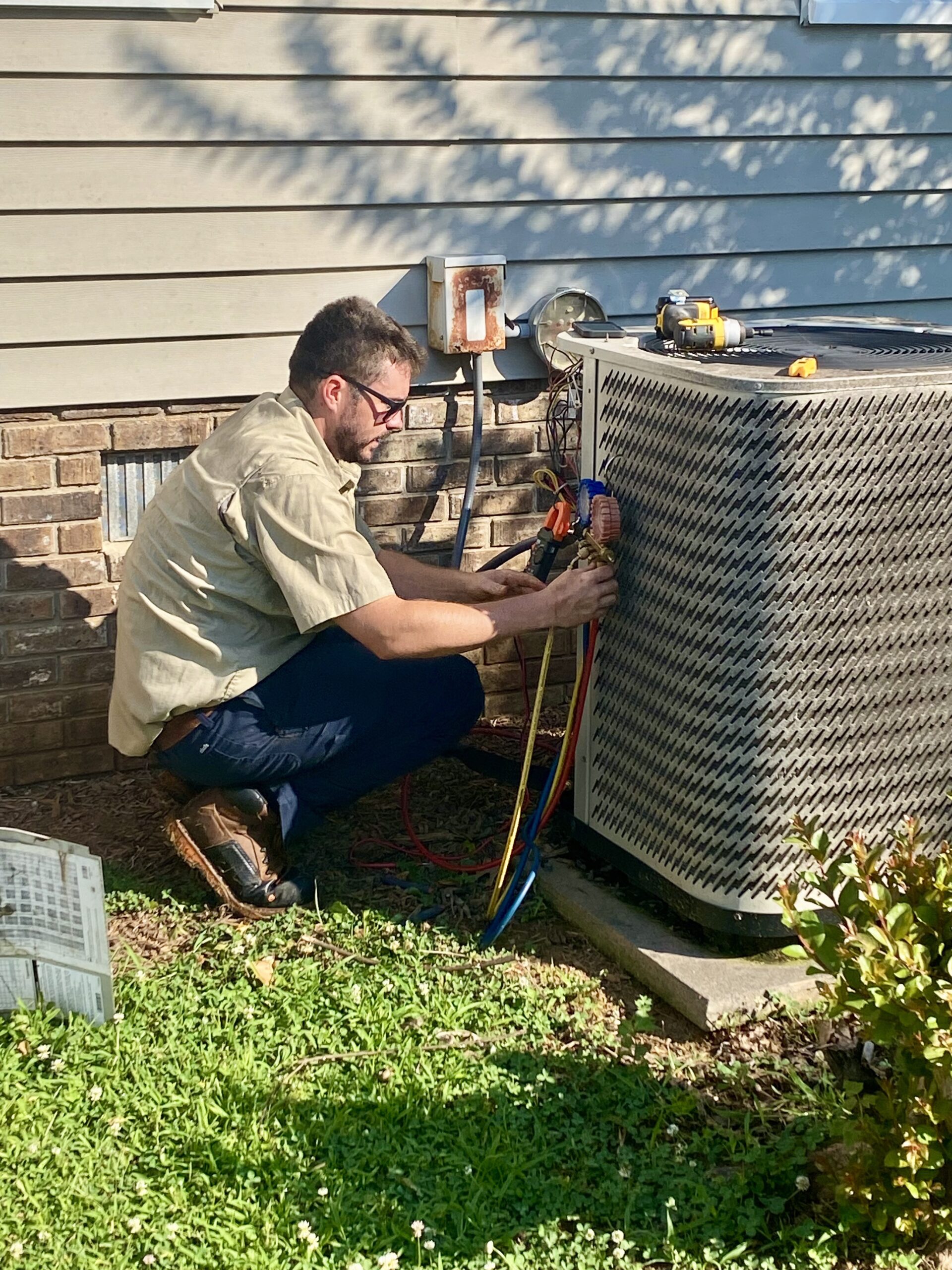
We’ll be straight with you. Every credible source we trust, including Trane, Bryant, and major HVAC contractors, warns against DIY capacitor work. The part stores enough electrical charge after the system is off to cause serious injury. We don’t share replacement steps in this guide for that reason.
If your capacitor is suspect, get a licensed technician to discharge, test, and replace it. A correct replacement has to match the original microfarad and voltage rating exactly. Mismatches cause the same motor stress as the original failing part. Catching the problem early through routine seasonal AC maintenance is usually cheaper than waiting for the symptom call.
How Often Should AC Capacitors Be Replaced?
According to Angi, residential HVAC capacitors typically last around 10 years, with a range of 5 to 20 years depending on usage, ambient temperature, and maintenance habits. Trane notes that while capacitors can last 20 years, most don’t, and AC capacitor replacement remains one of the most common HVAC repairs they handle.
Annual tune-ups help. Our techs check capacitor microfarad readings on every visit. If yours is drifting toward the edge of the ±6% window, we tell you before it fails, not after.
Frequently Asked Questions
Will a bad capacitor damage my compressor?
Yes. The mechanism is documented: a weak capacitor forces the compressor motor to draw extra current to start and run, which generates excess heat in the windings. Sustained heat shortens motor life and, in worse cases, burns out the compressor entirely. Conditioned Air Solutions and Leith HVAC both describe this cascade in detail.
Why does my AC hum but the fan doesn’t spin?
That hum is the motor trying to start without enough torque, which is a classic sign of a failing run capacitor. Bryant lists this exact symptom in its homeowner guide. Don’t keep cycling the system, the motor is drawing locked-rotor current and will overheat fast.
Can I keep running my AC if the capacitor is visibly swollen?
No. A swollen or bulging capacitor is in a pre-failure state and can rupture. Trane is unambiguous on this. Shut the unit off at the breaker and call a licensed technician.
Is it worth replacing the capacitor on an older AC?
In most cases, yes, especially in 2026. If your system uses R-410A and the capacitor takes out the compressor, your repair options narrow quickly and get expensive. A capacitor replacement keeps a working system working until you’re ready to budget for a planned upgrade rather than a forced one.
Does a bad capacitor always trip the breaker?
Not always, but it often does once degradation is advanced. When the motor pulls excess current trying to start, the breaker can interpret it as a fault and trip. If your AC breaker has tripped more than once recently, treat that as a serious warning sign and stop resetting it until a tech has inspected the unit.
How can I tell if my capacitor is bad without opening the panel?
You can’t fully confirm it without measuring microfarads on a discharged capacitor, which requires the panel open and the right meter. But the six Trane symptoms above (slow starts, random shutoffs, humming, no cold air, burning smell, high bills) are reliable observational signs that warrant a service call.
Get a Microfarad Reading Before Summer Hits Hard
If your AC has shown any of the warning signs above, the cheapest thing you can do right now is have a tech put a meter on the capacitor and confirm it’s still inside the ±6% window. That measurement takes minutes. The compressor it protects is the most expensive single part in your system.
Homeowners across Anderson, Greenville, Spartanburg, Pickens, Buncombe, Henderson, Polk, Laurens, Greenwood, Oconee, and Wayne counties have trusted our family with their comfort since 1969. If you’d like one of our techs to take a look before the heat sets in, call Tuck & Howell Plumbing, Heating & Air and we’ll get you on the schedule.


Schedule service For Your Home or Business Today!
Let us address your HVAC and plumbing concerns promptly and efficiently, providing you with reliable and lasting results. Your satisfaction is our top priority!