Upgrade Your Comfort! FLEXIBLE FINANCING AVAILABLE!

Window AC Not Blowing Cold Air? The Top Causes We See on Service Calls
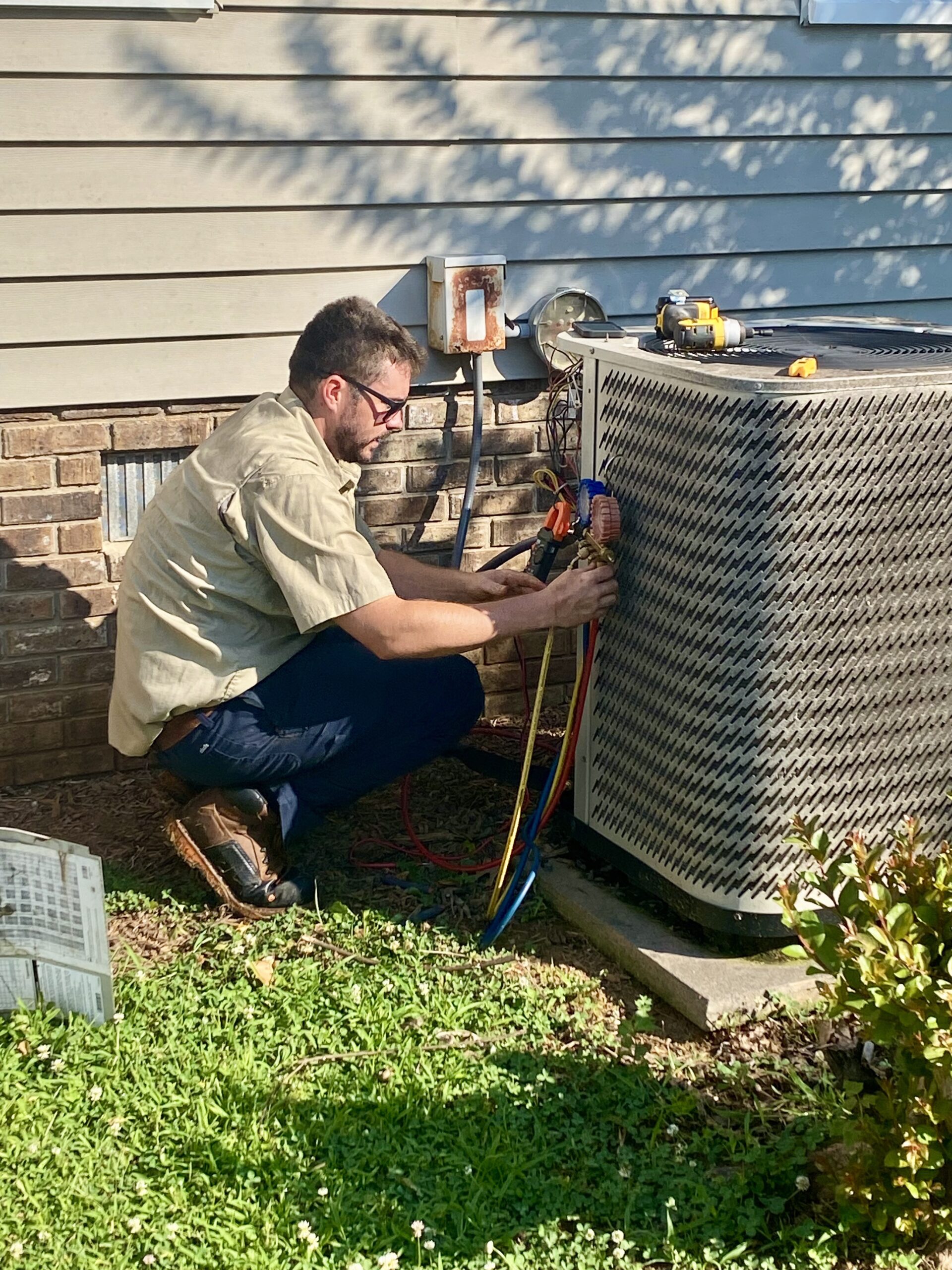
It’s a sticky July afternoon in the Upstate. Your window unit is humming away, the fan’s pushing air, but the room still feels like a warm blanket. Sound familiar? You’re not imagining it, and you’re not alone.
A window AC that runs but won’t cool is one of the most common calls we get once summer settles in across Greenville, Spartanburg, Anderson, and the surrounding counties. The good news? The cause is usually one of a handful of things, and many of them point you straight to the fix. If the problem turns out to be a sealed part or refrigerant, that’s when professional AC repair becomes the safer route. We’ll explain why below.
Here’s what we actually find when we open these units up. We’ve kept it plain, sourced, and honest, including one thing that has nothing to do with a breakdown at all.
Why Is My Window AC Running but Not Blowing Cold Air?
The most common reason is poor airflow, usually from a dirty filter that ices over the coil.
When the filter clogs with dust, air can’t move across the evaporator coil. The coil gets too cold, frost builds up, and that ice blocks airflow even more. So the unit runs, the fan blows, but what reaches you is barely cool. Appliance-repair guides from Fix.com point to restricted airflow as the number one cause of a window unit that won’t cool.
Start here before anything else. Pull the filter, check for dust, and rinse it if it’s washable. A clean filter is also what lets us rule out the bigger stuff fast.
Why Is Ice Forming on My Window Air Conditioner if It’s Not Cooling?
Ice means airflow or refrigerant is off, and the coil dropped below freezing.
Two things usually cause it. First, that clogged filter we just talked about. Second, low refrigerant from a leak. According to advice shared by an HVAC professional through Family Handyman (April 2025), if your unit isn’t blowing cold and you spot ice on the coils or in the drain pan, low refrigerant is a likely suspect, but only after you’ve confirmed the filter is clean.
Here’s the part most people don’t know: with a window unit, low refrigerant is never a simple top-off. More on that in a moment.
“It Runs but the Room Stays Warm and Clammy” Could Mean the Unit Is the Wrong Size
A unit that’s too big cools the air fast but never pulls out the humidity, so the room feels cool, damp, and sticky.
This one surprises folks. Nothing is broken. The AC is just oversized for the room. The EPA and ENERGY STAR explain that an oversized unit reaches the set temperature before it can wring moisture out of the air. It shuts off, the moisture evaporates back in, and you’re left with that clammy feeling. That short-cycling also encourages mold growth over time.
This matters more here than in a lot of places. Our region sits in a humid subtropical climate, with Greenville’s average July high around 90°F and the air feeling thick through July and August when dewpoints climb past roughly 65°F (NWS Greenville-Spartanburg; Weather Spark). On those days, a wrongly sized unit gets exposed quickly.
Here’s the sizing guidance from DOE and ENERGY STAR you can use:
- Start at about 20 BTU per square foot of room space
- Add 600 BTU for each regular person beyond the first
- Add 4,000 BTU if the unit cools a kitchen
- Adjust up or down about 10% for very sunny or heavily shaded rooms
- Most room ACs run between 5,500 and 14,000 BTU/hr
If your numbers don’t match your unit, the AC may be working fine. It just doesn’t fit the space.
Why Does My Window AC Smell Musty? It Might Be the 2025 Midea Mold Recall
If your unit runs but smells musty and isn’t cooling right, check whether it’s part of the June 2025 recall.
This is the cause no online source mentions, and it’s worth a careful look. In June 2025, the CPSC announced a recall of about 1.7 million Midea U and U+ window air conditioners over a mold risk. A drainage flaw let water pool inside the unit, creating conditions for mold to grow (CPSC.gov; Consumer Reports, June 5, 2025; CBS News, June 7, 2025).
A few details to help you check yours:
- Sold March 2020 through May 2025 under several names, including Midea, Comfort Aire, Danby, Frigidaire, Insignia, Keystone, LBG Products, Mr. Cool, Perfect Aire, and Sea Breeze
- Sold at major retailers like Best Buy, Costco, Home Depot, and Menards
- Affected sizes: 8,000, 10,000, and 12,000 BTU, roughly 22 inches wide by 14 inches high
- The model number sits on a label on the front right of the unit
- At the time of the notice, there were at least 152 mold reports and 17 reports of symptoms, such as coughing, sore throats, and allergic reactions
The remedy is a free repair (a new drain plug) or a refund through Midea. If your unit matches, contacting Midea is your first step, not a repair call.
Can You Add Refrigerant to a Window Air Conditioner Yourself?
No. Refrigerant work on a window unit is legally restricted to EPA-certified technicians, and these units aren’t built for topping off anyway.
A window AC is what the EPA calls a “small appliance.” It’s manufactured, charged, and sealed at the factory with five pounds or less of refrigerant. Under the Clean Air Act (40 CFR Part 82), anyone adding or removing refrigerant from an AC appliance must hold EPA Section 608 certification (Type I or Universal) (epa.gov).
There’s also a practical reason. Window units are sealed systems with no service ports. So “low refrigerant” isn’t a top-off, it’s a sign of a leak in a sealed system. That calls for professional recovery and repair, or a new unit. It’s one of the clearest moments to step back and let a certified tech handle it.
Is It Worth Repairing a Window AC or Should You Replace It?
It depends on the unit’s age, which part failed, and whether refrigerant is involved.
Many common problems, like a dirty filter, a bad capacitor, or a faulty sensor, can be repaired by an HVAC professional. But severe compressor failure often means the unit isn’t worth saving (ARS; Carrier). There’s also a timing angle worth knowing.
A new federal efficiency standard for room air conditioners took effect with compliance beginning May 26, 2026 (Federal Register, 2023; ASAP). The new rules deliver 20% to 36% energy savings depending on the product class and effectively require variable-speed inverter compressors for units larger than 8,000 BTU/hr. For context, about 21% of U.S. households own at least one room AC, and roughly half of those own two or more.
Here’s a simple way to weigh it:
| Situation | Lean toward repair | Lean toward replacement |
| Unit age | Under about 5 years | Closer to 8 to 10 years |
| Failed part | Capacitor, filter, sensor | Compressor |
| Refrigerant | No leak | Sealed-system leak |
| Cooling result | Cools fine after fix | Still struggles, oversized, or recalled |
| Efficiency | Already efficient | Old unit, high power use |
One more note for anyone shopping new: some ENERGY STAR room ACs now use R-32 refrigerant, which has a climate impact roughly two-thirds lower than the refrigerant in many older units (ENERGY STAR). It’s another reminder that refrigerant handling belongs with a trained tech, not a hardware-store purchase.
The Tuck & Howell Window-Unit Service-Call Checklist
When we get one of these calls, we work through the same five points in order. You can run the first few yourself before you ever pick up the phone.
- Check the filter and coil. Dust on the filter or frost on the coil is the usual culprit. Clean the filter and let any ice melt fully.
- Confirm the size fits the room. Use the BTU math above. A clammy room often means the unit’s too big, not broken.
- Smell test and recall check. A musty odor plus weak cooling? Look up the model number against the 2025 recall list.
- Look for ice, leaks, or gaps. Ice on the coils points to airflow or refrigerant. Daylight around the frame means hot outside air is fighting the cold (Family Handyman).
- Call a pro for sealed or electrical parts. Refrigerant, capacitors, and compressors need test equipment and certification.
Steps four and five are usually where homeowners reach a wall. That’s a good time to book a seasonal AC maintenance visit so a small issue doesn’t turn into a hot, miserable weekend.
Other Causes We Check on Service Calls
The table-stakes problems still show up, so here’s what else we test, each one backed by a source.
| Cause | What’s happening | Source |
| Failed start/run capacitor | The compressor won’t start, so the fan blows only warm air. Needs test equipment to confirm. | Fix.com |
| Faulty thermistor (temp sensor) | A bad sensor behind the filter, next to the coil, throws off cooling. | Fix.com / Family Handyman |
| Blocked rear condenser | The outdoor-facing side can’t shed heat, pushing warm air back inside. | Carrier; Family Handyman |
| Tripped breaker / blown fuse | Cuts power to parts. Repeated tripping signals a wiring or capacitor issue. | Bryant; ARS |
| Compressor failure | Severe failure usually means replacement, while many other causes are repairable. | ARS; Carrier |
| Poor installation / gaps | Visible daylight around the unit lets hot air leak in and cancel the cooling. | Family Handyman |
Ready to Get Cool Air Back? Talk to Tuck & Howell
If you’ve cleaned the filter, ruled out the recall, and the room still won’t cool, the next step is a proper diagnosis. Whether it’s a frozen coil, a sealed-system leak, or a sizing mismatch, our licensed technicians can pin down the cause and tell you straight whether a repair makes sense or a replacement is the smarter call.
We’ve been serving families across Anderson, Buncombe, Spartanburg, Pickens, Greenville, Laurens, Polk, Henderson, Greenwood, Wayne, and Oconee Counties since 1969. Reach out to Tuck & Howell for an honest assessment, and let us show you “Howell” we’re different.
Frequently Asked Questions
Is window AC mold dangerous? It can be. The 2025 Midea recall noted reports of respiratory infections, allergic reactions, coughing, and sore throats tied to mold in affected units (CPSC). If your unit smells musty, check the model number against the recall list and contact Midea about the free repair or refund.
What size window AC do I need for my room? Start with about 20 BTU per square foot, then add 600 BTU per extra person, 4,000 BTU for a kitchen, and adjust roughly 10% for very sunny or shaded rooms (DOE/ENERGY STAR). Bigger isn’t better here. An oversized unit leaves the room cool but damp.
Why does my window AC blow cold, then warm? A common cause is a coil that freezes during a long run, then can’t cool once it ices over. A dirty filter or low refrigerant is usually behind it. Clean the filter first, and if it returns, have it checked.
Can I just add refrigerant myself? No. Window units are factory-sealed with no service ports, and EPA Section 608 rules require certification to handle refrigerant (epa.gov). Low refrigerant means a leak, which needs a professional.
When should I call a pro for a window AC not cooling near me? Once you’ve cleaned the filter, ruled out the recall, and the unit still won’t cool, or if you see ice, leaks, or electrical trips. Folks across Greenville, Spartanburg, Anderson, and Hendersonville can reach our team directly for service.
A quick note: regulations and recall details current as of June 2026. For your specific unit and the latest recall or efficiency rules, confirm with the manufacturer, CPSC, or a licensed technician.


Schedule service For Your Home or Business Today!
Let us address your HVAC and plumbing concerns promptly and efficiently, providing you with reliable and lasting results. Your satisfaction is our top priority!