Upgrade Your Comfort! FLEXIBLE FINANCING AVAILABLE!
Best AC Unit Brands: Ranked by What We Repair Least
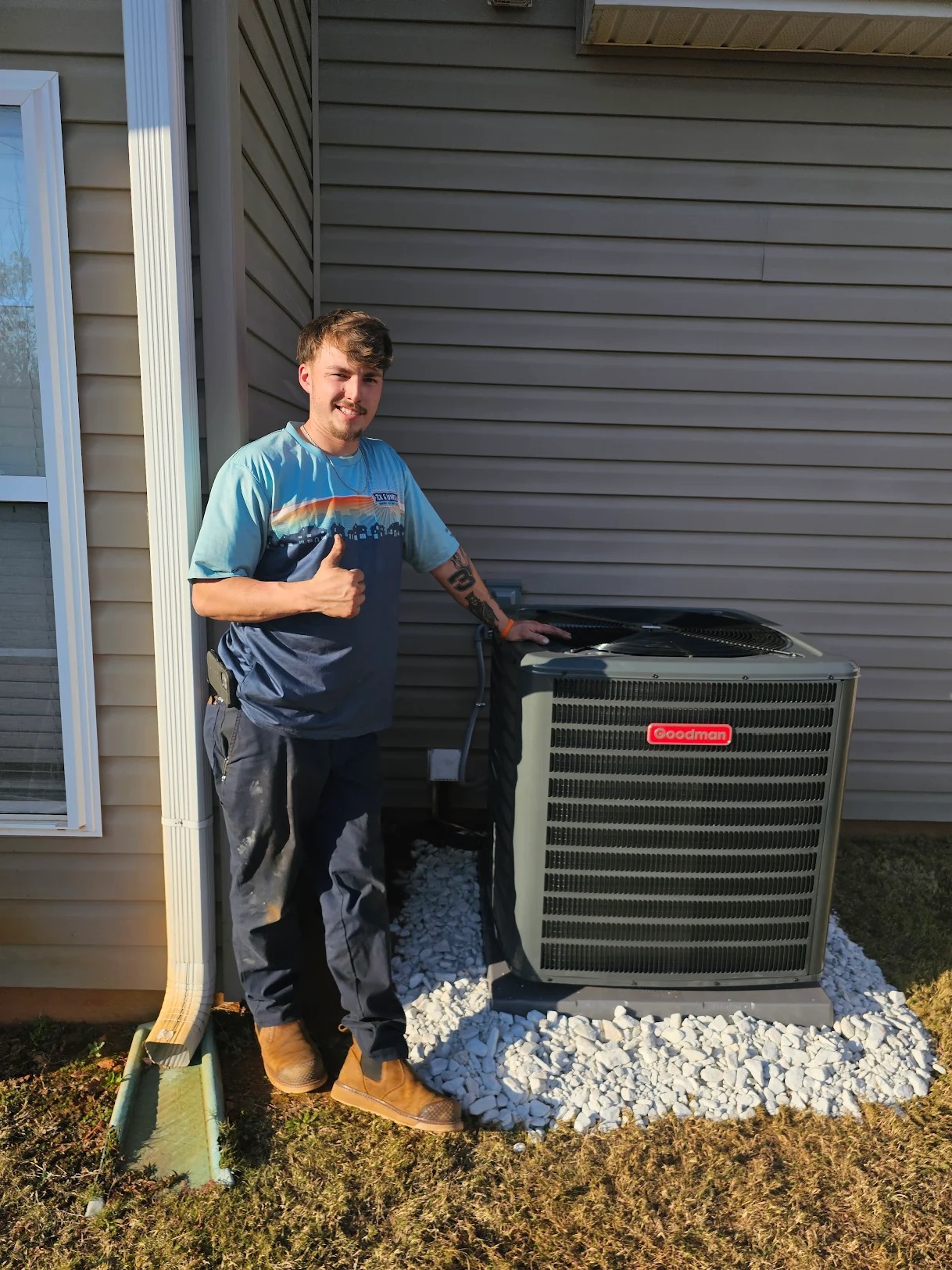
Most “best AC brand” lists are written by people who have never opened a condenser cabinet in July. Ours isn’t. At Tuck & Howell Plumbing, Heating & Air, our trucks have been running through Greenville, Greer, Spartanburg, and Anderson since 1969, and the brands we go back to fix are not always the brands with the loudest ads.
Two things changed recently that make this a strange year to buy. The EPA finalized a rule on May 21, 2026 that removed the January 1, 2026 installation deadline for R-410A equipment, and it takes effect July 27, 2026. At the same time, the federal 25C tax credit for HVAC equipment expired on December 31, 2025. So the old advice you’ll find on a 2023 blog post is now partly wrong.
If you’re staring at three quotes with three different brand names and no idea which one you’ll regret, this is the piece that sorts it out. And if you’d rather just have someone look at your actual system, our team handles HVAC service in Greenville, SC seven days a week.
How We Rank Brands: The Tuck & Howell Service-Truck Test
Short answer: we don’t score brands on brochure specs. We score them on how often a system pulls us back out.
Here’s what we weigh, in order:
- Repeat repair calls. How often does the same system need us again inside its first five years?
- Evaporator coil track record. Coils are the weak point in humid climates, and Consumer Reports found the evaporator coil is among the most-reported problems in its member survey.
- Parts availability in the Upstate supply chain. A great system with a six-week board on backorder is not a great system in August.
- Refrigerant platform. R-454B or R-32 changes what your tech needs on the truck.
- Warranty support. Some manufacturers approve a claim in a day. Some take a week of paperwork.
Our own service philosophy says it plainly on our site: “We specify reliable brands that stand up to daily use… durability reduces repeat calls and keeps repair costs down.”
That’s the whole premise. Fewer callbacks is the only brand metric a homeowner actually feels.
One honest note before you read on: we’re not going to publish invented repair percentages. What follows is national survey data you can verify, plus what we see in the field across Anderson, Pickens, Laurens, Oconee, Greenwood, and our Western NC service area.
What Is the Most Reliable AC Brand According to Actual Data?
Direct answer: Consumer Reports’ member survey rates Armstrong and Day & Night highest for predicted reliability, while American Standard and Trane earn top marks for owner satisfaction. Trane also took the Lifestory Research 2025 America’s Most Trusted HVAC System Study for the 11th year running.
Some detail behind those numbers, because they matter:
- Consumer Reports based its findings on 13,306 members who bought central AC or ductless mini-splits between 2009 and 2024, across nearly two dozen brands.
- About 19 percent of those central AC systems ran into at least one problem. Of those, 24 percent either stopped working properly or quit entirely.
- Consumer Reports placed Comfortmaker, Heil, Luxaire, and York in its unfavorable reliability tier, and it doesn’t recommend models in its bottom two tiers.
- The Lifestory Research 2025 study gave Trane a Net Trust Quotient of 113.4, drawn from 8,856 U.S. consumer opinions collected over 12 months.
Reliability and satisfaction aren’t the same thing, and it’s worth separating them. A brand can rank high for satisfaction because dealers handle problems well, not because problems are rare.
| Brand tier (per Consumer Reports member survey) | What the data shows | What we watch for in the field |
| Top predicted reliability | Armstrong, Day & Night | Fewer early-life service tickets |
| Top owner satisfaction | American Standard, Trane | Strong dealer support on claims |
| Unfavorable reliability tier | Comfortmaker, Heil, Luxaire, York | Coil issues, per CR’s 11% coil problem rate for Luxaire and York |
What Part of an AC Fails Most Often in Humid Southern Homes?
Direct answer: the evaporator coil. Consumer Reports lists it among the most-reported problems, and it showed an 11 percent coil problem rate for Luxaire and York specifically.
Coils matter more here than they do in Denver. Upstate South Carolina runs humid for months, and your evaporator coil is pulling moisture out of the air every hour the system runs. More runtime and more condensate mean more chances for corrosion, drainage issues, and biological growth.
What that means for you practically:
- Coil cleaning belongs in your maintenance routine, not just filter changes
- Standing water at the drain pan is an early warning, not a small annoyance
- A system that ices up isn’t “working too hard,” it usually has an airflow or charge problem
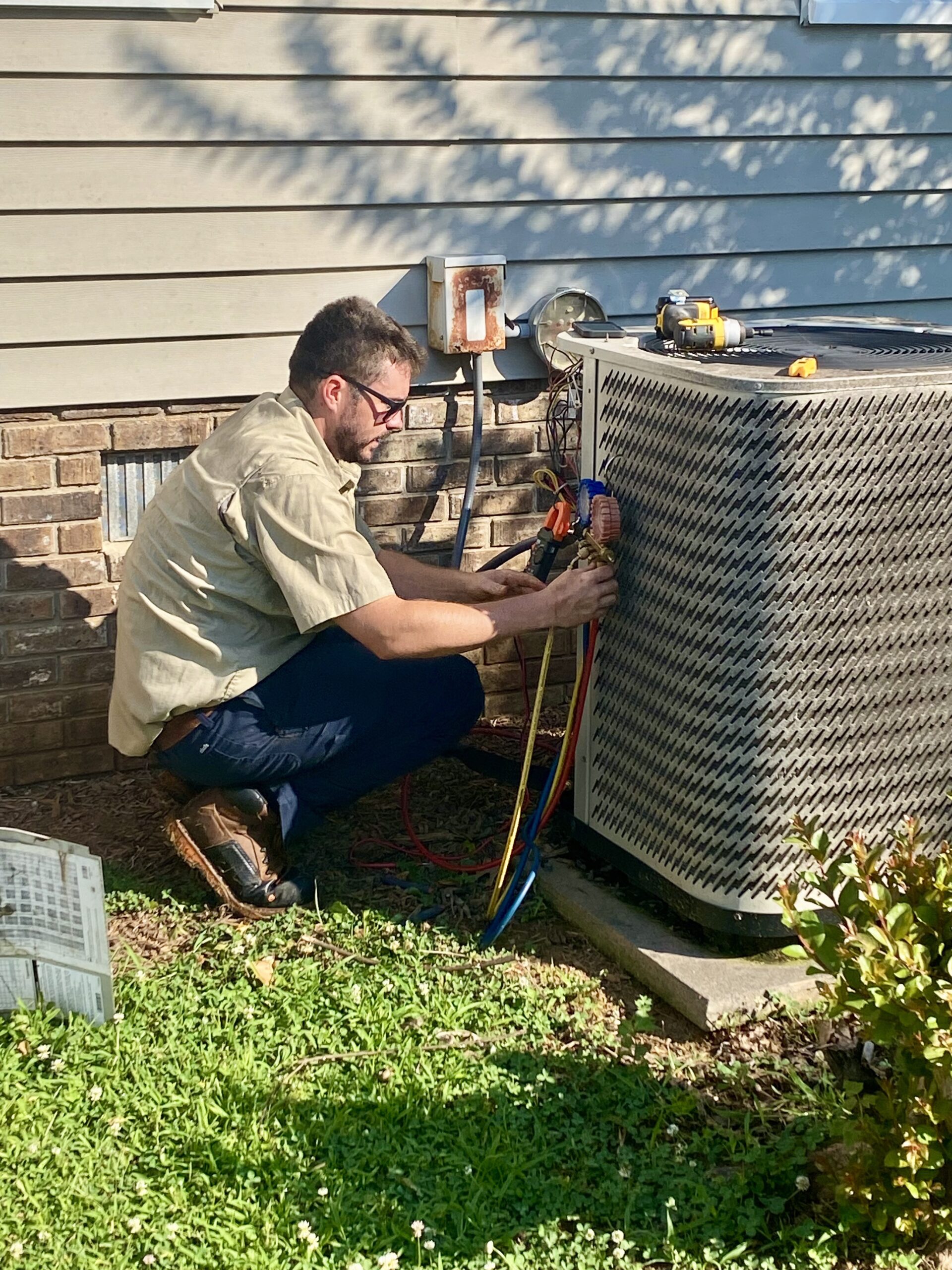
Refrigerant work is not a homeowner job. Consumer Reports is direct that DIY HVAC fixes are unsafe, and refrigerant handling is regulated. If you’re seeing ice or water where it shouldn’t be, get eyes on it before it turns into a compressor conversation.
Does the AC Brand Matter More Than the Installer?
Direct answer: no. Installation quality has a larger measurable effect than brand choice. ENERGY STAR reports improper installation can cut system efficiency by up to 30 percent, and poorly sealed ducts can cause up to a 30 percent efficiency loss on their own.
Consumer Reports doesn’t even lab-test central air conditioning, and its reasoning is the most useful thing in the whole study: outcomes depend on home size, install quality, and ductwork. You can’t test a system independently of the house it’s bolted into.
The NIST research points the same direction. Piotr Domanski, who leads HVAC performance research at NIST, has reported that improper installation can push household heating and cooling energy use up by roughly 30 percent. His work also notes that in hot, humid climates, duct leakage drives indoor humidity up, which makes people lower the thermostat and burn even more energy.
Paraphrased from NIST: Piotr Domanski’s research team found that installation errors can raise a home’s heating and cooling energy use by about 30 percent, with duct leakage in humid regions adding an indoor moisture problem on top of the efficiency loss.
Read that twice if you’re comparing quotes. A mid-tier brand installed correctly will beat a premium brand installed badly, every season.
A few install details worth asking any contractor about:
- Load calculation, not a rule-of-thumb size based on square footage
- Duct sealing and static pressure testing, not just a new box outside
- Refrigerant charge verified by measurement, not by feel
- Technician certification. We display the NATE badge because NATE is the country’s largest non-profit HVAC certification body
If you’re at the point where the quotes look identical and you can’t tell what’s different, that’s the moment to ask about the install process rather than brand. Our team walks through AC installation and replacement in Greer, SC the same way, and we’d rather explain it than have you guess.
What Refrigerant Do New AC Units Use in 2026, and Which Brands Use Which?
Direct answer: new residential systems run on A2L refrigerants. Trane, Carrier, Lennox, and Rheem use R-454B. Daikin is the major manufacturer using R-32 for residential split systems.
Here’s the background in plain terms. Under the AIM Act, EPA restrictions took effect January 1, 2025 on higher-GWP refrigerants in new residential AC and heat pump equipment. After that date, no new residential split-system AC or heat pump using R-410A could be manufactured or imported. Every major brand moved to A2Ls.
| Refrigerant | Brands using it (residential split systems) | What it means for service |
| R-454B | Trane, Carrier, Lennox, Rheem | Most common platform in the U.S. market |
| R-32 | Daikin | Different cylinder and tooling on the truck |
| R-410A | Legacy systems already installed | Still legal to service |
Are A2L refrigerants safe? ASHRAE classifies A2Ls as low-toxicity and mildly flammable. They’re installed under updated safety standards by certified technicians, which is exactly why this category of work has moved further away from anything a homeowner should attempt.
Can I Still Install an R-410A Air Conditioner in 2026?
Yes, from existing inventory. The EPA’s May 21, 2026 final rule removed the January 1, 2026 installation deadline, so contractors can keep installing R-410A residential equipment that was manufactured or imported before January 1, 2025 until that stock runs out. The rule takes effect July 27, 2026.
Whether that’s the right call for your home is a different question. It depends on how long you plan to stay, what’s available locally, and what the pricing looks like on both platforms right now.
Will My Existing R-410A System Still Be Repairable?
Yes. A working R-410A system doesn’t become obsolete because of the manufacturing rules. Service refrigerant remain legal. Cost and availability move around, so ask for current conditions rather than assuming last year’s numbers.
Why New AC Systems Got More Expensive, and What Actually Drives Repair Costs
Direct answer: the refrigerant transition and supply chain pressure are the verified drivers. During 2025, high demand, A2L cylinder shortages, and supply issues pushed refrigerant cylinder prices up sharply, including a 42 percent surcharge from Honeywell. Contractors reported to ACHR News that it was the roughest transition the industry has been through.
For homeowners, that showed up as longer lead times and quotes that reflected supply conditions. It wasn’t contractors padding numbers.
On repairs, Consumer Reports notes that service visits often run a few hundred dollars each. We’re not going to publish equipment prices in a blog post, because refrigerant and equipment costs are genuinely moving right now and a stale number helps nobody. Ask for a current quote instead.
Is There a Federal Tax Credit for a New AC in 2026?
No. The federal Energy Efficient Home Improvement Credit under Section 25C expired December 31, 2025, eliminated by the One Big Beautiful Bill Act signed July 4, 2025. No federal credit applies to HVAC equipment installed in 2026.
Systems placed in service by the 2025 deadline may still be claimed on 2025 returns. State and utility rebates can still exist, so check with your utility and confirm anything tax-related with a tax professional.
What SEER2 Rating Is Required in South Carolina?
South Carolina falls in the Southeast DOE region. Split-system ACs under 45,000 Btu must meet 14.3 SEER2 (15 SEER). Systems at or above 45,000 Btu must meet 13.8 SEER2 (14.5 SEER). These are enforced by installation date. Heat pumps in any region must meet 14.3 SEER2 and 7.5 HSPF2.
Which AC Brand Is Best for Humid Upstate South Carolina Homes?
Honest answer: no third-party study answers this, because no national ranking accounts for our humidity load, our duct conditions, or what’s actually stocked at local supply houses this week.
That’s the gap we can fill. What we’ve seen over 55-plus years of service work in Greenville and Spartanburg counties is that the brand ranking matters less than three local realities:
- Coil durability under long humid runtimes, which is where national reliability tiers do carry weight
- Local parts stocking, because a brand nobody stocks in the Upstate means longer downtime
- Dealer depth, because warranty coverage only helps if someone nearby can process the claim
Industry commentary through 2026 has landed in the same place: refrigerant platform now matters less than serviceability, and local stocking and spare-parts availability drive real-world recommendations.
Want a straight recommendation for your specific house? That takes a load calculation and a look at your ductwork, not a blog post. We’re a 4.9-rated company across 1,888 Google reviews, A+ with the BBB and accredited since September 2000, licensed in South Carolina (CLM.2159) and North Carolina (#35198), with locations in Duncan, Greenville, Greer, and Simpsonville.
Frequently Asked Questions
Which AC brand lasts the longest?
There’s no verified single answer, and any list claiming one is guessing. Consumer Reports members expect a median lifespan of about 15 years from a central air system. Per CR survey lead Simon Slater, choosing a brand with stronger predicted reliability and satisfaction improves your odds of getting a dependable system, but sizing, install quality, and maintenance move that number more than the badge does.
Are premium AC brands worth the extra cost?
Sometimes. The reliability-tier data supports paying more for a better-rated brand, since fewer failures means fewer service visits at a few hundred dollars each. But “worth it” depends on your home, how long you’re staying, and your ductwork. A premium system feeding leaky ducts wastes the premium.
I have three quotes with three different brands. How do I choose?
Compare the install scope line by line before you compare brand names. Ask each contractor for the load calculation, whether duct sealing is included, and what the warranty registration process looks like. If one quote is much cheaper, find out what was left out.
My AC is 12 years old and works fine. Should I replace it before something changes?
There’s no regulatory reason to. Your R-410A system stays serviceable and service refrigerant remains legal. The practical question is repair frequency: if you’ve had two or more repairs in recent seasons, replacement math starts to shift. A tech can tell you where yours sits.
Do you service brands you didn’t install?
Yes. Our technicians work across the major residential brands, including systems we didn’t put in. Brand loyalty is useful when specifying new equipment. It’s not useful when your house is 82 degrees on a Saturday.
What areas do you cover?
Our service area includes Greenville, Greer, Duncan, Simpsonville, Spartanburg, Anderson, Easley, Pickens, Clemson, Liberty, Fountain Inn, Boiling Springs, Inman, and Lyman, along with surrounding counties in Upstate South Carolina and Western North Carolina. Check our Service Areas page for the full map.
Get a Brand Recommendation Based on Your House, Not a Ranking Chart
The best AC brand for you is the one that fits your load, your ducts, your budget, and your timeline, installed by someone who’ll still answer the phone in year seven. With the EPA rule shift landing July 27, 2026 and R-410A inventory finite, this is a reasonable moment to ask questions before you’re forced into a rushed decision in the middle of a heat wave.
Tuck & Howell Plumbing, Heating & Air has been doing this since 1969, with 24/7 emergency service and a VIP Membership plan that covers two tune-ups a year, coil cleaning, priority service, and discounted parts. Call us for a current quote and a real assessment of what your home needs.
Reach out today to see “Howell” we’re different.
Schedule service For Your Home or Business Today!
Let us address your HVAC and plumbing concerns promptly and efficiently, providing you with reliable and lasting results. Your satisfaction is our top priority!